

C3 Corvette Interior Colors & Trim Codes 1968-1982
Which body paint each interior trim was offered against
Last reviewed August 2026, maintained by Corvette-C3.com
topChevrolet paired a short list of interior trims with each year's paint colours, and gave every trim its own code on the tag next to the paint code. Pick your year to see that year's codes, which material each one was, and which body colours it was offered against. The free trim tag decoder on this site reads the trim code off your tag for you, and checks whether Chevrolet recommended that colour over that trim.
Pick your model year
The dots are on-screen approximations of the trim colours, meant to tell them apart rather than to match them.
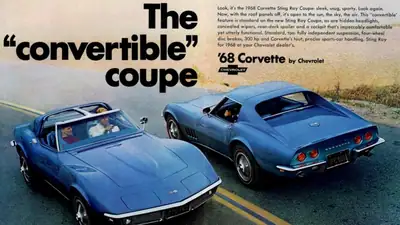 1968
BlackRedMedium BlueDark BlueDark OrangeTobaccoGunmetal
7 interiorstrim codes and paint pairings
1968
BlackRedMedium BlueDark BlueDark OrangeTobaccoGunmetal
7 interiorstrim codes and paint pairings
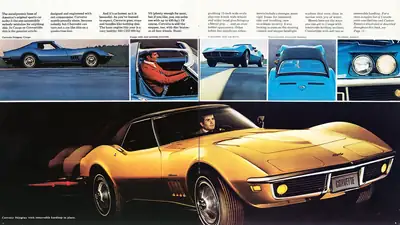 1969
BlackRedBright BlueGreenSaddleGunmetal
6 interiorstrim codes and paint pairings
1969
BlackRedBright BlueGreenSaddleGunmetal
6 interiorstrim codes and paint pairings
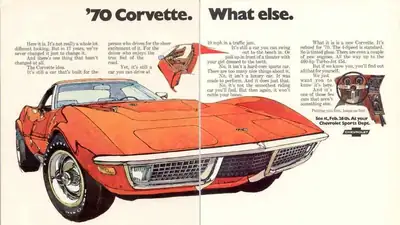 1970
BlackRedBlueGreenSaddleBrown
6 interiorstrim codes and paint pairings
1970
BlackRedBlueGreenSaddleBrown
6 interiorstrim codes and paint pairings
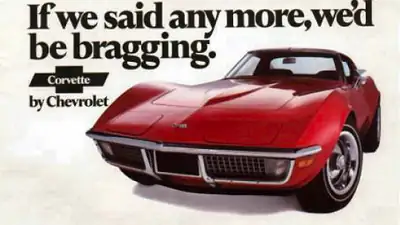 1971
BlackRedDark BlueDark GreenSaddle
5 interiorstrim codes and paint pairings
1971
BlackRedDark BlueDark GreenSaddle
5 interiorstrim codes and paint pairings
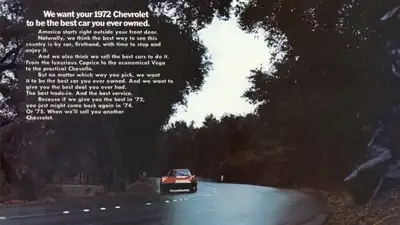 1972
BlackRedBlueSaddle
4 interiorstrim codes and paint pairings
1972
BlackRedBlueSaddle
4 interiorstrim codes and paint pairings
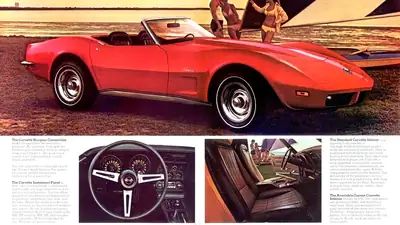 1973
BlackDark BlueMedium SaddleDark SaddleDark Red
5 interiorstrim codes and paint pairings
1973
BlackDark BlueMedium SaddleDark SaddleDark Red
5 interiorstrim codes and paint pairings
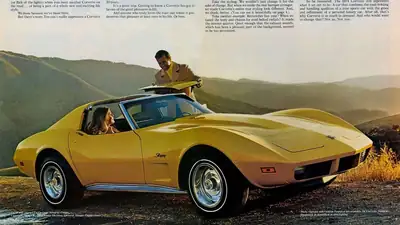 1974
BlackSilverNeutralDark BlueMedium SaddleDark Red
6 interiorstrim codes and paint pairings
1974
BlackSilverNeutralDark BlueMedium SaddleDark Red
6 interiorstrim codes and paint pairings
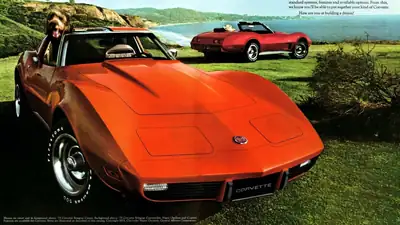 1975
SilverBlackDark BlueNeutralMedium SaddleDark Red
6 interiorstrim codes and paint pairings
1975
SilverBlackDark BlueNeutralMedium SaddleDark Red
6 interiorstrim codes and paint pairings
 1976
WhiteSmoke-GrayBlackBlue-GreenLight BuckskinDark BrownDark Firethorn
7 interiorstrim codes and paint pairings
1976
WhiteSmoke-GrayBlackBlue-GreenLight BuckskinDark BrownDark Firethorn
7 interiorstrim codes and paint pairings
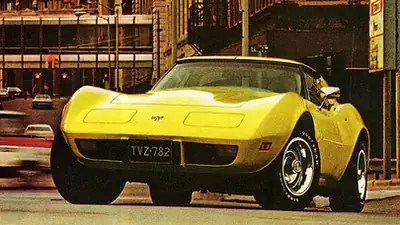 1977
WhiteSmoke-GrayBlackDark BlueBuckskinDark BrownMedium Red
7 interiorstrim codes and paint pairings
1977
WhiteSmoke-GrayBlackDark BlueBuckskinDark BrownMedium Red
7 interiorstrim codes and paint pairings
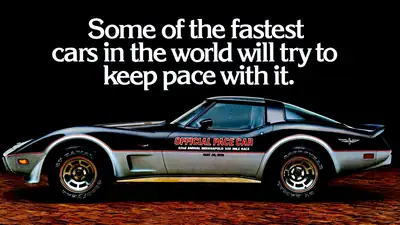 1978
BlackMedium RedSaffronLight DoeskinDark BlueDark BrownOyster White
7 interiorstrim codes and paint pairings
1978
BlackMedium RedSaffronLight DoeskinDark BlueDark BrownOyster White
7 interiorstrim codes and paint pairings
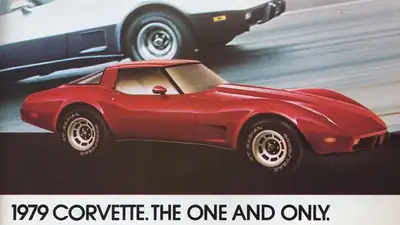 1979
BlackMedium RedLight DoeskinDark BlueDark BrownOyster White
6 interiorstrim codes and paint pairings
1979
BlackMedium RedLight DoeskinDark BlueDark BrownOyster White
6 interiorstrim codes and paint pairings
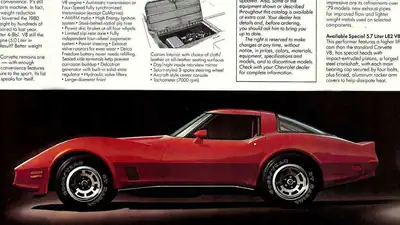 1980
BlackMedium RedDoeskinDark BlueDark GreenSilverClaret
7 interiorstrim codes and paint pairings
1980
BlackMedium RedDoeskinDark BlueDark GreenSilverClaret
7 interiorstrim codes and paint pairings
 1981
CharcoalMedium RedCamelDark BlueSilverMedium Cinnabar
6 interiorstrim codes and paint pairings
1981
CharcoalMedium RedCamelDark BlueSilverMedium Cinnabar
6 interiorstrim codes and paint pairings
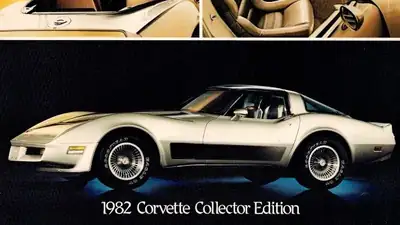 1982
Silver GrayCharcoalDark RedCamelDark BlueSilver Green
6 interiorstrim codes and paint pairings
1982
Silver GrayCharcoalDark RedCamelDark BlueSilver Green
6 interiorstrim codes and paint pairings
How the interiors changed, 1968 to 1982
The material tells the clearest story. From 1968 to 1976 the standard interior was vinyl, with leather as the upgrade. In 1977 and 1978 the charts list leather with cloth inserts alongside plain leather, an odd hybrid that the C4, C5, C6 and C7 never repeated. From 1979 to the end of the run it is plain cloth as standard, with leather still above it. Leather is the one material you can order in every single year of the C3.
The choice narrows and then widens again. The 1968 cars offer seven trims, which falls to four by 1972, the leanest year of the run, and climbs back to seven for the late seventies. The names drift as well: the plain Black, Red and Saddle of the early cars give way to Smoke-Gray, Doeskin, Buckskin and Camel by the end, which is the interior equivalent of the same shift you see in the paint.
Two things worth knowing before you read a chart. The mark in the grid records what the factory recommended, not what was possible, because other pairings could be had on special order. And a trim code identifies the colour and material, not the seat design, which changed under the same codes as the years went on. If you are working the other way round, from a code on the tag, the trim tag decoder will name it and tell you whether the factory recommended it with your paint colour.
Two names also mean less than they seem to. Saffron, offered in 1978, is not a yellow at all: the trade sells it as Saffron or Mahogany Red and it is a deep amber red. And a trim colour names the seats rather than the whole cabin, since dash tops and carpet often ran to their own shade whatever the seats were. Oyster White is the clearest case of that. There is also a rare exception to the whole idea of one colour per car: RPO ZJ1, a two-tone interior for 1976 and 1977 that never appeared in the brochures and had to be specially ordered, put white seats against a second colour on the carpet, dash and console.
Paint colours and codes → Decode your VIN → Decode your trim code →
Reading the charts on the year pages
How to read these charts
The tricky part is the block of headings at the top, which is three rows deep. The first row is the interior colour. The two rows under it are the trim codes for that same colour, one for each material. So the same colour has a different code depending on whether the car was trimmed in vinyl or in leather.
Here is the top of the 1972 chart:
| interior colour | Black | Red | Blue | Saddle |
| code in Vinyl | 400 | 407 | 412 | 417 |
| code in Leather | 404 | n/a | n/a | 421 |
Read that as: a black interior is code 400 in vinyl and 404 in leather, the same colour twice. Red is 407 in vinyl and could not be had in leather at all in 1972, which is what the n/a means.
Everything below that heading block is one row per exterior paint colour, with its paint code on the left. The mark where a paint row meets an interior column tells you whether the factory offered that pairing:
- X or R : a factory recommended exterior and interior combination. Most years use X, while 1978, 1979 and 1981 use R.
- A : available by special order (1978, 1979 and 1981).
- --- : this combination was not offered.
- n/a : that colour was not offered in that material.
So on a 1972 car a trim tag reading 404 means black leather, and you can read down that column to see which paint colours it was sold with.
Always read the chart for your own year. The same number means different things in different years: black leather is 404 in 1972, but 403 in 1970 and 1971 and 402 in 1968 and 1969. From 1975 the codes change shape again and carry a letter, so a plain three digit number does not appear on a later tag at all. The pairings listed are the ones the factory recommended; other combinations could sometimes be ordered specially.